The Algorithm Has No Idea What Country You're From — And That's Changing Everything
Somewhere in Georgia — the country, not the state — a musician records a track in a language spoken by roughly 3.7 million people worldwide. He posts it. The algorithm picks it up. Six weeks later, a teenager in Columbus, Ohio is using it as the soundtrack to a video about her morning routine, and the comment section is full of Americans asking where they can find more.
This is not a fluke. This is the system working exactly as designed — and it's breaking American entertainment in ways the industry is still struggling to process.
What the Algorithm Actually Optimizes For
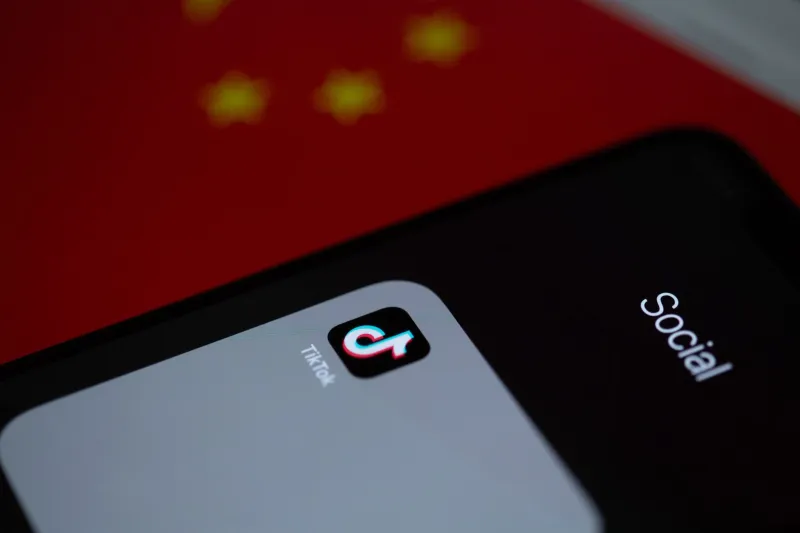
Let's start with the mechanics, because they matter. TikTok's recommendation system — the For You Page — is built around behavioral signals, not demographic profiles. It doesn't primarily ask who you are or where you're from. It asks what you watched, how long you watched it, whether you rewatched it, and whether you engaged. That's it. That's the whole game.
This sounds simple, but the implications are enormous. A track doesn't need a marketing budget to get recommended. It doesn't need a label. It doesn't need radio promotion or a PR campaign or a sync deal. It needs to make people stop scrolling. And it turns out that a hypnotic beat from a producer in Ho Chi Minh City can stop an American scroll just as effectively as anything coming out of Atlanta or Los Angeles.
The algorithm is, in this sense, ruthlessly democratic — and ruthlessly indifferent to the structures that have governed the music industry for generations.
The Geography of Virality Is Getting Weird
Traditional music industry logic assumed that global success moved in one direction: outward from the English-speaking world. You made it in America, then you exported it everywhere else. The reverse — non-English content breaking into the American mainstream — was considered nearly impossible without massive institutional support. K-pop did it, eventually, but it took years of deliberate, expensive groundwork.
What's happening now is different. Artists from Southeast Asia, Eastern Europe, and West Africa are accumulating American fanbases not through industry strategy but through algorithmic accident. A Filipino producer's lo-fi beat gets looped in thousands of American study videos. A Romanian hyperpop artist lands on a US playlist because her track got used in a meme format that spread. A Senegalese drummer's practice clip becomes a reference point for American musicians who'd never heard of him six months ago.
None of these broke through because someone decided they should. They broke through because the algorithm decided the content was worth showing to more people, and it kept making that decision until the numbers became impossible to ignore.
Micro-Communities Are the New Radio Stations
Here's the part that really rattles traditional gatekeepers: these algorithmic pathways don't just create individual viral moments — they build sustained communities around artists who would otherwise have zero American footprint.
A Thai indie rock band that posts consistently can develop a small but intensely devoted US following over the course of a year. Not millions of fans, but tens of thousands who know every album, who stream religiously, who create fan content and translate lyrics and argue passionately in comments sections. These micro-communities function like the old fan clubs of the pre-internet era — tight, knowledgeable, evangelical — except they're forming around artists who sing in languages most of their fans don't speak.
For the music industry, this creates an interesting problem. The old model of artist development assumed that American success required American infrastructure — a US label deal, domestic radio promotion, English-language singles, a US tour. All of that is still useful. But it's no longer strictly necessary to build a real American audience. And that changes the leverage equation significantly.
The Gatekeepers Are Losing the Plot
Record labels, radio programmers, and music press have spent decades functioning as filters between artists and audiences. They decided what got heard. Their decisions shaped taste. Their infrastructure was, effectively, the only viable path to scale.
TikTok didn't just create an alternative path. It created a path that in some ways outperforms the traditional one, because it's personalized in ways that broadcast media fundamentally cannot be. Radio plays the same song for everyone in a market. The algorithm plays different songs for different people based on what it knows will make them stay. That's a qualitatively different kind of recommendation, and it's producing qualitatively different results.
Labels are adapting — slowly, awkwardly, sometimes embarrassingly. Some have started scouting TikTok's international trending charts specifically looking for artists with organic US traction. Others have started signing artists to deals that include explicit provisions about TikTok content strategy. A few have started backing artists in non-English-speaking markets specifically because their algorithmic performance suggests American crossover potential.
But the adaptation is always trailing the reality. By the time a label identifies an artist who's already building an American following through the algorithm, that artist has leverage they wouldn't have had five years ago. They've already proven demand. They don't need to be discovered — they need a distribution partner. That's a very different conversation.
What American Audiences Are Actually Telling Us
The deeper story here isn't really about TikTok or algorithms. It's about appetite. American audiences — particularly younger ones — are apparently far more open to non-English content than the industry assumed. The gatekeepers weren't just filtering for quality. They were filtering for familiarity, for linguistic comfort, for the kind of cultural proximity that made marketing easier.
When you remove those filters, it turns out Americans will happily listen to music they can't fully understand if it makes them feel something. They'll follow artists they can't easily communicate with. They'll build fan communities around content that arrives without translation or context.
That's not a small thing. That's a fundamental revision of a core assumption that has shaped American entertainment strategy for decades. And the algorithm, with its complete indifference to borders and languages and industry hierarchies, is the thing that proved it.
The music industry will catch up eventually. It always does. But right now, the algorithm is several moves ahead, and it's playing a game with different rules than anyone planned for.