The Kid in Lagos Making Your Favorite American Hits From a $300 Setup
The Hit Factory Nobody Talks About
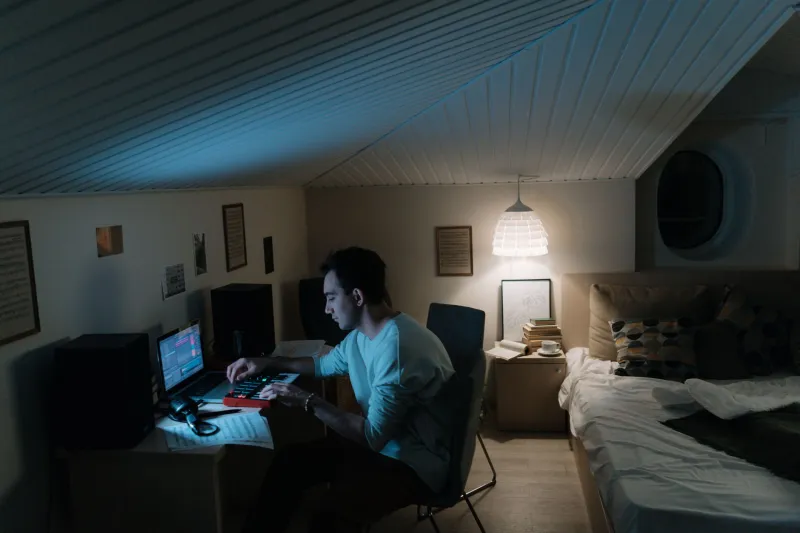
Picture the classic image of a music producer: a massive studio in Los Angeles, racks of gear, a major label exec nodding along in the corner. Now delete all of that. Replace it with a small room in Lagos, a secondhand MIDI keyboard, a cracked copy of FL Studio, and a 23-year-old who learned everything he knows from YouTube tutorials and Discord servers.
That's not a hypothetical. That's increasingly just Tuesday in the global music industry.
While American radio still sounds like American radio on the surface, the people actually building those songs — the producers crafting the drum patterns, the melodic loops, the sonic textures that make a track feel inevitable — are more likely than ever to be working from bedrooms in Nigeria, Ghana, Brazil, or the Philippines. And most listeners have absolutely no idea.
How the Pipeline Actually Works Now
The traditional path from producer to placement used to require geography. You had to be in Atlanta, or LA, or New York. You had to know somebody who knew somebody. You had to physically hand a USB drive to a manager at the right party.
That whole system has been quietly dismantled.
Platforms like BeatStars and Airbit let producers upload instrumentals that any artist in the world can license instantly, sometimes for as little as $30. SoundCloud and YouTube still function as massive discovery engines. But the real connective tissue now is a combination of TikTok, Instagram DMs, and private Discord communities where producers and artists find each other organically, often across thousands of miles and multiple time zones.
A producer in Lagos uploads a beat. An independent artist in Atlanta stumbles across it at 2am. They buy a lease, record a vocal, post a clip on TikTok. The clip gets 800,000 views in 48 hours. Suddenly a label A&R is calling — not the producer, but the artist. The producer's name might end up in the metadata. It might not.
This is how the sausage gets made in 2024.
The Names You Should Already Know
Take Ozedikus, the Nigerian producer behind Fireboy DML's "Peru" — a song that became a genuine global phenomenon after Ed Sheeran hopped on the remix. Ozedikus was working out of Lagos, building tracks that blended Afrobeats rhythms with pop sensibilities that translated instantly across cultures. When "Peru" exploded in the US and UK, it wasn't because a label had strategically positioned it. It was because the song was undeniable, and TikTok does not care about your marketing budget.
Or look at the trajectory of producers like London-based (but Nigerian-rooted) P2J, who has production credits on Beyoncé's Lemonade and has quietly shaped some of the most critically praised R&B of the last decade. The through-line in these stories isn't luck — it's access. Digital tools leveled a playing field that used to be tilted almost entirely toward people with proximity to power.
Then there's the broader ecosystem of producers from Accra's Tema neighborhood, from São Paulo's periphery, from Manila's sprawling suburbs — all uploading, all networking, all competing for the same placements that used to go exclusively to a handful of well-connected studio rats in major American cities.
Why TikTok Changed the Equation Permanently
Here's what TikTok actually did that nobody fully predicted: it made the beat the star.
Before short-form video, a song's success depended heavily on radio play, which depended on label relationships, which depended on geography and gatekeeping. TikTok collapsed that entire chain. If a 15-second clip of a song makes people feel something — joy, nostalgia, the urge to dance in their kitchen — it spreads. Full stop. The song doesn't need a label. The producer doesn't need a visa. The artist doesn't need to be signed.
This has created what you might call a producer-first discovery economy. Beats go viral before they're even fully produced. Artists chase sounds they hear in trending clips. Labels reverse-engineer what's already working instead of predicting what will. The creative origin point has shifted dramatically away from traditional industry infrastructure and toward individual creators with good ears and decent internet connections.
For a bedroom producer in Lagos, that's not just an opportunity. It's a seismic power shift.
The A&R Problem Nobody Wants to Admit
Here's where it gets uncomfortable for the traditional music business: A&R — the art of finding and developing talent — used to be the industry's most valuable skill. Labels paid handsomely for people who could walk into a room, hear something, and know it was going to be big.
That skill still matters. But it's being systematically undercut by algorithms that surface hits before human ears get there.
When a Nigerian producer's beat is already trending in three countries before a major label even hears it, the A&R's job has fundamentally changed. They're not discovering anymore — they're responding. And responding is a very different posture than leading.
Some labels have adapted by hiring people who specifically monitor global beat markets, who spend time in international producer communities, who understand that the next big sound in American pop might be gestating right now in a Lagos apartment building. Others are still waiting for acts to come to them through the old channels.
Guess which approach is working better.
What This Means for American Listeners
If you're an American music fan, here's the practical upshot: the songs you love are increasingly the product of a genuinely global creative process, even when they don't sound explicitly "international." That subtle drum pattern you can't get out of your head? Might be rooted in Afrobeats. That melodic hook that feels fresh but also somehow familiar? Could have been built in a bedroom in São Paulo by someone who's never set foot in a recording studio that costs more than a used car.
This isn't a niche thing anymore. It's the mainstream, quietly.
The geography of hit-making has dissolved. The tools are cheap. The platforms are borderless. And the kid in Lagos with the $300 setup is not waiting for permission from anyone in Los Angeles.
He's already on to the next one.