From Basement Fan Clubs to the Grammys: The Unstoppable Rise of K-Pop in America
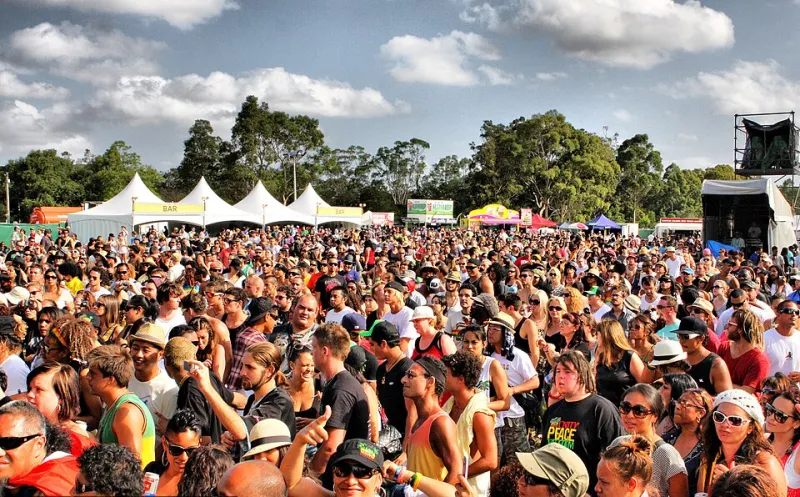
Photo: Eva Rinaldi, CC BY-SA 2.0, via Wikimedia Commons
Picture this: It's 2012, and a group of teenagers in suburban Ohio are huddled around a laptop, obsessively rewatching a music video that most of their classmates have never heard of. The artists are Korean, the lyrics are largely in a language they don't speak, and the choreography is so sharp it almost doesn't look real. Fast forward to 2024, and those same fans are buying out arenas, streaming billions of songs, and watching their favorite acts perform on the Grammy stage.
That's the K-pop story in America — and it's one of the most fascinating cultural shifts in modern music history.
The Early Days: A Fandom Built on Passion (and Slow Internet)
Long before BTS was a household name and BLACKPINK was headlining Coachella, K-pop had a scrappy, dedicated American fanbase doing the heavy lifting. Online forums, early YouTube uploads, and fan-subbed videos were the lifeblood of a community that felt like a secret club. Groups like TVXQ, Super Junior, and Girls' Generation had small but fiercely loyal followings across the US, mostly built through word of mouth and fan sites.
Music historians who've tracked this era point to something important: these early American fans weren't passive consumers. They were translators, promoters, and advocates all rolled into one. They created subtitled content, ran fan accounts, and essentially built the infrastructure that would later support much bigger waves of popularity.
"The early American K-pop fandom was doing grassroots marketing before brands even understood what grassroots digital marketing was," says one music industry analyst who has studied the genre's international expansion. "They were ahead of the curve in ways that even the Korean entertainment companies didn't fully appreciate at the time."
The Social Media Explosion Changes Everything
If the early 2010s were K-pop's underground years in America, the mid-2010s were when the tectonic plates started shifting. Twitter became a battleground for fan armies. YouTube's algorithm began rewarding high-engagement content — and K-pop fans were engagement machines. Streaming platforms like Spotify started making global music genuinely accessible, removing the friction that once kept international artists on the margins.
But the real game-changer was the way Korean entertainment companies had structured their entire approach to fandom. Unlike Western labels, which often kept artists at arm's length from their audiences, K-pop agencies built parasocial relationships into their business model. Behind-the-scenes content, fan meetings, reality shows documenting trainee life — all of it created an intimacy that Western pop simply wasn't offering at the same scale.
American fans responded to that intimacy in a massive way. By the time BTS dropped their first English-language content and started engaging directly with US fans on platforms like Weverse and Twitter, the groundwork had already been laid by years of community-building.
BTS Breaks the Billboard and Everything Changes
The moment that signaled K-pop's true American breakthrough came in 2018 when BTS's Love Yourself: Tear debuted at number one on the Billboard 200. It was the first Korean-language album to ever top that chart, and the music industry sat up and took notice in a serious way.
What followed was a cascade of milestones. BTS sold out stadiums across the US. They performed on every major American talk show. They addressed the United Nations. And then, in 2020, "Dynamite" — their first entirely English-language single — hit number one on the Billboard Hot 100, making them the first Korean act to ever accomplish that feat.
The numbers were impossible to ignore, but more importantly, so was the cultural footprint. BTS merchandise was selling out at Target. Their fans, the ARMY, were trending on Twitter around the clock. American media, which had largely treated K-pop as a curiosity, started dedicating serious coverage to what was clearly a mainstream phenomenon.
BLACKPINK and the Coachella Moment
While BTS was dominating the charts, BLACKPINK was conquering a different kind of cultural real estate. Their 2019 Coachella performance — making them the first Korean act to play the iconic festival — was a statement that K-pop wasn't just a chart phenomenon but a genuine cultural force. Millions of people who'd never streamed a K-pop song watched that set and came away impressed.
BLACKPINK's approach to the American market differed from BTS's in interesting ways. Where BTS built their US following largely through the sheer scale of their fandom and their willingness to engage directly with fans in English, BLACKPINK pursued high-profile collaborations and fashion partnerships that placed them squarely in mainstream pop and luxury brand culture. Lady Gaga, Selena Gomez, Dua Lipa — BLACKPINK's features and collaborations read like a who's-who of Western pop royalty.
The strategy worked. By the early 2020s, BLACKPINK members were gracing the covers of major American fashion magazines, and Jennie, Jisoo, Rosé, and Lisa had each built massive individual followings that transcended the group's collective brand.
What Makes K-Pop's Global Playbook Different
Here's the thing that separates K-pop's international expansion from other global music exports: it was never accidental. Korean entertainment companies spent years developing what industry insiders sometimes call the "idol system" — a highly structured approach to artist development that prioritizes performance excellence, visual consistency, and deep fan engagement simultaneously.
Compare that to, say, the way Latin music crossed over into American mainstream culture, which happened more organically through demographic shifts and individual breakout moments. Or the British Invasion of the 1960s, which was largely driven by the cultural cache of a specific moment in time. K-pop's American conquest was methodical, data-informed, and fan-powered in a way that's genuinely unprecedented.
Streaming algorithms also played a crucial role. As Spotify and Apple Music refined their recommendation engines, K-pop's high replay rates and engaged listener base meant the genre kept getting served to new audiences. A casual listener might stumble onto a BTS track through a playlist and find themselves deep in a rabbit hole within days.
Where Things Stand Now — and Where They're Headed
Today, K-pop is no longer a niche interest or a curiosity in America — it's a pillar of mainstream pop culture. Second and third-generation K-pop groups like TWICE, Stray Kids, ATEEZ, and aespa are building their own dedicated American fanbases, carrying the torch forward. American artists are collaborating with Korean acts more frequently than ever, and the cultural exchange flows in both directions.
The Grammy stage, once an unimaginable destination for Korean artists, is now a realistic conversation. Nominations and performances have followed, and it feels like only a matter of time before the genre's biggest names take home hardware from music's most prestigious night.
For those Ohio teenagers who were rewatching videos on slow internet connections back in 2012? They saw it coming. The rest of America just took a little longer to catch up.