Afrobeats Is Not a Trend — It's a Takeover, and America Is Finally Listening
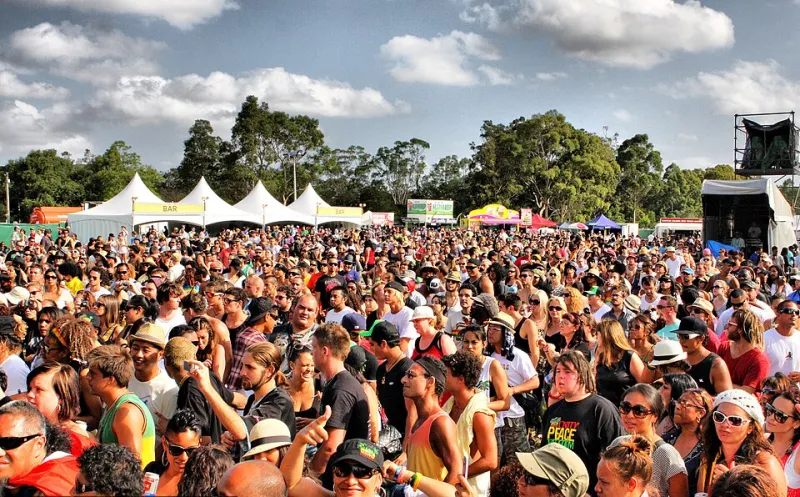
Walk into any college house party in Atlanta, New York, or Houston these days, and there's a solid chance you'll hear the unmistakable pulse of Afrobeats cutting through the noise. That rolling percussion, those melodic hooks, that effortless blend of joy and depth — it hits different. And increasingly, American listeners aren't just nodding along. They're seeking it out, streaming it obsessively, and showing up to concerts in numbers that would have seemed unthinkable just five years ago.
But here's the thing: Afrobeats didn't just appear out of nowhere. Its rise to global dominance is the product of years of groundwork laid by artists, diaspora communities, streaming platforms, and a generation of listeners who decided that geography shouldn't limit what they love.
The Sound That Started It All
First, a quick clarification that music fans love to debate: "Afrobeats" (with an 's') is the umbrella term most commonly used in global conversations, though purists will note it's distinct from "Afrobeat" — the genre pioneered by the legendary Fela Kuti in the 1970s. Modern Afrobeats draws from a rich ecosystem of Nigerian, Ghanaian, and broader West African musical traditions, blending highlife, jùjú, hip-hop, dancehall, and R&B into something that feels simultaneously ancient and completely of-the-moment.
Artists like D'banj and P-Square were generating serious buzz in African markets and among diaspora communities in the UK and US through the late 2000s and early 2010s. But the international breakthrough moment — the one that made Western industry executives genuinely pay attention — came when Wizkid's "Ojuelegba" got a remix co-sign from Drake and Skepta in 2015. Suddenly, a track that was already beloved across West Africa and its diaspora was landing in front of millions of new ears.
The Diaspora Effect: Culture Carried Across Borders
To understand why Afrobeats hit America the way it did, you have to understand the role of the Nigerian and broader African diaspora in cities like Houston, Dallas, Atlanta, Washington D.C., and New York. These communities have been the cultural connective tissue between African music scenes and American audiences for decades.
Diaspora listeners weren't waiting for American tastemakers to tell them what was hot. They were already streaming Burna Boy mixtapes, sharing Wizkid tracks in WhatsApp groups, and filling out Nigerian restaurant playlists with the latest sounds from Lagos. When streaming platforms made it easier for that music to travel, and when algorithms started picking up on engagement patterns, Afrobeats essentially had a built-in launch pad.
"The diaspora was always the bridge," explains one cultural commentator who has tracked African music's global expansion. "But for a long time, that bridge felt invisible to mainstream American media. What changed is that the numbers got too big to ignore."
And the numbers really did get big. Wizkid's "Essence" featuring Tems became a genuine crossover smash in 2021, climbing the Billboard Hot 100 and earning a Grammy nomination. Rema's "Calm Down" — a breezy, infectious track that somehow manages to feel both urgent and relaxed — became one of the most-streamed songs globally in 2023, with a Selena Gomez remix pushing it even further into American mainstream consciousness. Burna Boy sold out Madison Square Garden. Twice.
The Streaming Algorithm as Cultural Equalizer
One of the most underappreciated forces behind Afrobeats' American ascent is the streaming algorithm — specifically, how platforms like Spotify and Apple Music began to recognize and amplify the genre's extraordinary engagement metrics.
Afrobeats tracks tend to have high replay rates, strong save-to-playlist behavior, and passionate listener bases that actively share music through social media. Those signals tell an algorithm that a track is worth pushing to new audiences, creating a feedback loop that can take a song from niche to massive in a matter of weeks.
TikTok accelerated this dynamic dramatically. The platform's global user base and its tendency to surface music based on emotional resonance rather than artist fame level meant that Afrobeats tracks — with their danceable rhythms and feel-good energy — were tailor-made for virality. A dance challenge or a trending sound could introduce an artist to millions of American Gen Z users who had no prior exposure to the genre.
What's significant here is that this represents a genuine shift in how global music hierarchies work. For most of the 20th century, the flow of musical influence was largely one-directional: American and British pop exported itself to the rest of the world. Streaming and social media have complicated that dynamic enormously, creating space for sounds from Lagos, Accra, and Nairobi to compete on genuinely level ground.
American Labels and Producers Scramble to Adapt
The music industry's response to Afrobeats' rise has been a mix of genuine enthusiasm and, in some cases, clumsy opportunism. Major labels have signed African artists at an accelerating pace, established African music divisions, and begun investing in Lagos and Accra as legitimate music industry hubs.
American producers have been eager collaborators. The fingerprints of US hip-hop and R&B production are detectable in plenty of contemporary Afrobeats tracks, and the reverse is equally true — African rhythmic sensibilities are showing up in the work of American producers who've been paying close attention. It's a genuine creative exchange, even if the business side of things sometimes lags behind.
Some African artists and critics have raised legitimate concerns about the industry's approach. There's a tension between celebrating global recognition and worrying that major label involvement could sand down the genre's edges, producing a more palatable but less authentic version of the sound for Western consumption. Burna Boy has spoken openly about the importance of maintaining artistic control and Nigerian identity even as his international profile has grown.
Gen Z's Hunger for Authenticity
There's a generational dimension to all of this that's worth sitting with. American Gen Z listeners have grown up in a genuinely globalized media environment. They've been exposed to anime, K-dramas, international TikTok creators, and global fashion trends from an early age. The idea that great music can only come from New York or Los Angeles feels genuinely outdated to this cohort.
Afrobeats resonates with these listeners partly because it feels authentic in a way that some corners of mainstream American pop do not. There's a directness to the emotion, a specificity to the cultural references, and a sonic richness that stands out in an era of algorithmically optimized chart pop. For a generation that prizes realness above almost everything else, that authenticity is magnetic.
What Comes Next
Afrobeats in 2024 is not a passing trend — it's a structural shift in global music culture. Artists like Asake, Ayra Starr, and Tems are already building the next chapter, bringing new sounds and perspectives to a genre that continues to evolve rapidly. The Grammy Recording Academy created a dedicated Afrobeats category in 2023, a formal acknowledgment of the genre's permanent place in the global music conversation.
For American listeners just now discovering this world, the entry point is genuinely exciting. There's an entire ecosystem of incredible music waiting — decades of it, from Fela Kuti's revolutionary Afrobeat to the slick contemporary productions coming out of Lagos studios today.
The takeover, as it turns out, has been in progress for a while. America just finally got the memo.