Hollywood Is Watching Your Watch Time — And It's Changing Everything You See on Screen
There's a scene in almost every big movie trailer now that feels a little... off. Too punchy. Too meme-ready. The kind of moment that's clearly been engineered to be screenshotted, looped, and captioned by a thousand different accounts within 48 hours of release. You've noticed it. We've all noticed it. And no, you're not imagining things.
Hollywood has entered full algorithm mode — and the consequences are rippling through every layer of the entertainment industry, from the stories that get funded to the way actors are coached to deliver lines.
The 30-Second Greenlight
Here's something that would've sounded insane to a studio exec in 2010: projects are now being evaluated, at least in part, by how well they'll perform in short-form clips. Not the whole film. Not the arc. The moment. The GIF-able, shareable, infinitely replayable sliver of content that could theoretically live on TikTok or Instagram Reels long after the movie itself fades from memory.
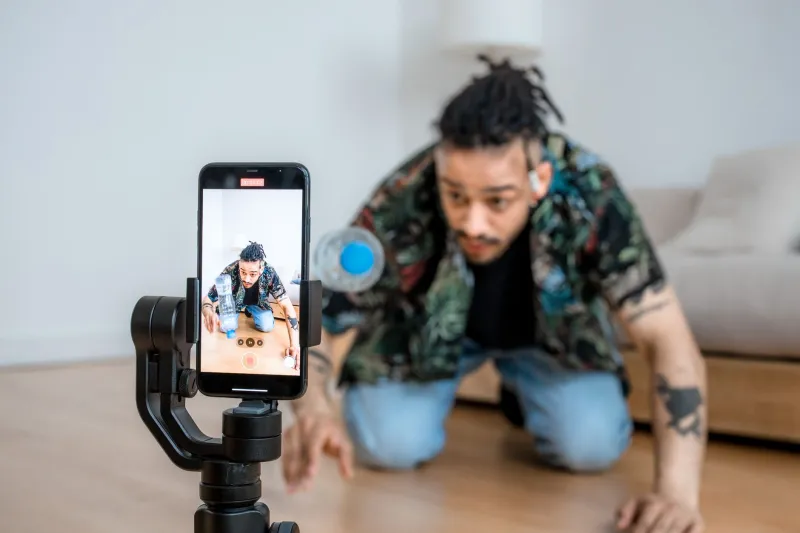
Emerging creators working in the digital-to-Hollywood pipeline say the pressure is real and it's constant. One director who recently made the jump from YouTube shorts to a mid-budget streaming feature described sitting in a development meeting where a producer literally asked, "But which scene is the TikTok scene?" before the script was even finished.
"It used to be about the poster moment," she said. "The iconic image. Now it's about the clip. The thing that plays without sound and still makes someone stop scrolling."
That shift might sound subtle, but it fundamentally changes what gets written, what gets shot, and what gets cut in the editing room.
Streaming Platforms Are the Real Architects Here
To be fair, this isn't purely TikTok's fault. Streaming platforms — Netflix, Max, Hulu, Prime Video — spent years obsessing over engagement metrics before short-form video even became the cultural juggernaut it is today. They built entire recommendation systems around watch time, completion rates, and skip behavior. TikTok just made the logic visible and gave it a face.
What platforms discovered is that the first few minutes of any piece of content are disproportionately important. Viewers who don't hook in fast don't stick around. So shows started front-loading their best moments. Films started getting edited with shorter scenes and faster cuts. The average shot length in Hollywood productions has been shrinking for over a decade — and that trend has only accelerated.
The result? A kind of content convergence where a Netflix series pilot and a TikTok video are increasingly engineered using the same underlying logic: grab attention immediately, reward it constantly, and never let the energy drop long enough for someone to reach for their phone.
Except, of course, they're already on their phone. That's the whole problem.
Who's Winning the Algorithm Game
Not everyone is losing sleep over this. Some creators — particularly those who came up making content natively for short-form platforms — are thriving in this new environment precisely because they understand the grammar.
Creators from South Korea's entertainment ecosystem, for example, have been playing this game for years. K-drama production houses have long understood how to build emotionally intense, clip-worthy moments into their storytelling without sacrificing narrative depth. It's why so many K-drama scenes go viral on TikTok with zero context — they're constructed to land even in isolation.
Similarly, some Latin American telenovela-style productions on streaming platforms have quietly figured out how to make content that performs in the algorithm and keeps audiences coming back for full episodes. The secret, according to producers who work in that space, is emotional specificity. A reaction shot. A reveal. A line reading so perfectly calibrated that it hits whether you've seen three episodes or none.
American studios are watching these playbooks closely. Some are even hiring writers and directors with short-form backgrounds specifically to inject that sensibility into bigger productions.
The Artistic Cost Nobody Wants to Talk About
But here's where it gets complicated. Several established filmmakers — the kind who've been in the industry long enough to remember when a slow burn was a selling point — are openly frustrated by the new calculus.
One veteran screenwriter, whose credits include multiple critically acclaimed cable dramas, described the current development environment as "creatively hostile to patience." His words. "You pitch a story that takes time to build, that asks the audience to sit with discomfort for a while, and the first note you get back is about pace. Always pace. Because someone somewhere decided that modern audiences can't wait."
The irony, he points out, is that some of the most-discussed prestige television of the last few years — the shows people genuinely obsess over — are slow. Methodical. Built for sustained attention. They just also happen to generate clips that go viral, almost as a byproduct of their quality rather than by design.
That distinction matters. There's a difference between a show that earns its viral moments and one that's been constructed backwards from them.
The Global Lens
From a global culture standpoint, what's fascinating is how this algorithmic pressure is reshaping not just American content, but the international content Americans are consuming. Foreign films and series that break through in the US market right now almost always have a TikTok footprint — a scene, a sound, a moment that traveled before the full work did.
That's a new kind of cultural export logic. It used to be that a film's reputation preceded it — word of mouth, critical buzz, festival wins. Now a 22-second clip can do more for international distribution than a Sundance prize. Which means the content that crosses borders is increasingly the content that was, consciously or not, built for the crossing.
Some see that as democratizing. Others see it as a flattening — a world where the most globally visible art is the art most optimized for a specific platform's feed.
The truth is probably both. And Hollywood, for better or worse, has stopped pretending it has a choice.
What Comes Next
The algorithm isn't going anywhere. Neither is the pressure it creates. But there are signs that some corners of the industry are starting to push back — or at least trying to find a middle ground where artistic ambition and algorithmic performance aren't mutually exclusive.
Independent studios and international co-productions are experimenting with longer formats again. Some streaming platforms are quietly testing whether audiences will engage with slower, more novelistic storytelling if the recommendation system surfaces it correctly. And a new generation of filmmakers — many of them global in their influences and instincts — are trying to tell stories that are emotionally immediate without being emotionally cheap.
Whether Hollywood listens to them, or keeps chasing the next 30-second hook, might just be the most important creative question of the decade.