Skipping the Algorithm and Calling Grandma Instead: How Gen Z Is Discovering the Films Their Parents Grew Up On
Somewhere between doom-scrolling and yet another Netflix banner ad, a weird thing started happening. Teenagers and twenty-somethings across the US began texting their parents — not for money, not for advice on health insurance — but to ask what they should watch next. And the answers they got weren't new releases. They were Fargo. The Breakfast Club. Do the Right Thing. Goodfellas. Films and shows that, by the algorithm's logic, have no business landing on a Gen Z watchlist in 2025.
But here's the thing: they're landing anyway. And the kids are loving them.
The Algorithm Has a Blind Spot — And Gen Z Found It
Streaming platforms are extraordinarily good at showing you more of what you already like. That's the whole pitch. But there's a growing frustration among younger viewers that the recommendation engine keeps them locked in a loop — same aesthetic, same pacing, same type of story, just with a different cast and a slightly different title. The algorithm optimizes for engagement, not discovery. And for a generation that's genuinely curious about cultural history, that's a real limitation.
What parents and grandparents offer is something no machine can replicate: context. When your dad tells you to watch Spike Lee's Do the Right Thing, he's not just recommending a movie. He's handing you a piece of lived American history — a window into what it felt like to be alive in 1989, in a specific city, during a specific tension. That emotional framing changes the entire viewing experience. Suddenly you're not just watching. You're time-traveling.
Family Viewing Parties Are Making a Quiet Comeback
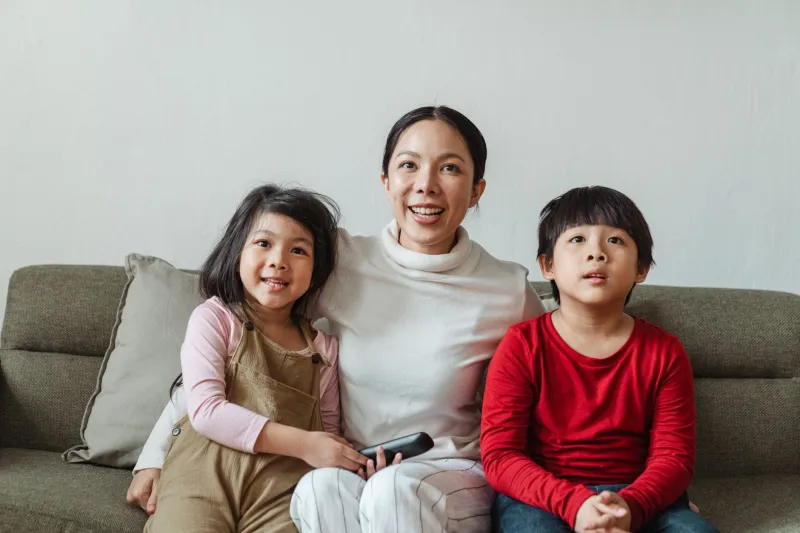
Ask around and you'll find it's surprisingly common. A college student in Atlanta sits down with her mom on a Sunday afternoon to finally watch Thelma & Louise. A 19-year-old in Chicago lets his grandfather walk him through every scene of The Godfather — pausing, explaining, reminiscing. These aren't curated events. They're spontaneous, low-key, and increasingly frequent.
Social media has actually helped fuel this. TikTok and YouTube are full of Gen Z creators posting their first-time reactions to older films — and the comments sections are flooded with older viewers who are visibly moved that someone their kid's age is finally seeing something they loved. It creates this cross-generational feedback loop that streaming platforms didn't engineer and can't fully replicate. The content is old. The connection is brand new.
What's interesting culturally is that these viewing parties aren't just about the movie itself. They're about the conversation around it. Who was the director? What was happening in America when this came out? Why did people lose their minds over this specific scene? Gen Z, more than any generation before them, seems genuinely hungry for that kind of context — the story behind the story.
"Outdated" Is the New Credibility
There's also a social currency element at play here that shouldn't be underestimated. In a media landscape where everyone is watching the same three shows the week they drop, being the person who just discovered Paris Is Burning or Repo Man or an obscure '90s Hong Kong action film your uncle mentioned carries a certain weight. It signals that your taste isn't just algorithm-fed. It's curated. It has roots.
This tracks with a broader Gen Z tendency to push back against the homogenizing effect of global streaming culture. If everyone on earth has access to the same content library, the flex isn't watching what's popular — it's knowing what came before. Vintage clothing has been cool for years. Vintage film and television are catching up.
Platforms like Criterion Channel and MUBI have quietly built serious Gen Z followings for exactly this reason. They offer older, more obscure, more internationally diverse content with the kind of curatorial voice that feels human rather than algorithmic. You're not just browsing a catalog — you're being guided by someone with actual taste.
What This Says About Gen Z's Relationship With Culture
It would be easy to read this trend as simple nostalgia. But that's not quite right, because nostalgia implies longing for something you personally experienced. Most of these kids weren't alive when Pulp Fiction came out. They're not nostalgic — they're archaeologists.
What they're really doing is building cultural literacy. Gen Z grew up in the era of viral moments, where a song or a clip or a meme could be globally massive for 72 hours and then completely forgotten. There's a real exhaustion with that cycle. Seeking out older content is, in some ways, a search for permanence — for things that mattered enough to stick around, to be passed down, to still generate conversation decades later.
And the global angle matters here too. It's not just American classics getting this treatment. Gen Z is asking parents about the Bollywood films they watched growing up, the telenovelas that were appointment viewing in their households, the Japanese dramas that came over on VHS. The "grandparent effect" isn't limited by borders. It's a transmission of cultural memory that happens to cross every kind of line — generational, national, linguistic.
The Streaming Giants Are Starting to Notice
Netflix, Hulu, and their competitors aren't blind to this. There's been a quiet but deliberate expansion of classic and legacy content on major platforms, along with more editorial curation features that try to mimic the feeling of a personal recommendation. Whether they can actually replicate the warmth of a parent saying "this movie changed my life, you have to see it" — that's a different question entirely.
For now, the most powerful recommendation engine on earth might just be a family dinner table.
Gen Z didn't kill the monoculture. They went looking for the one their parents lived in. And honestly? That might be the most unexpected cultural story of the decade.