From Bedroom to Billboard: How a New Wave of Global Producers Is Beating Major Labels at Their Own Game
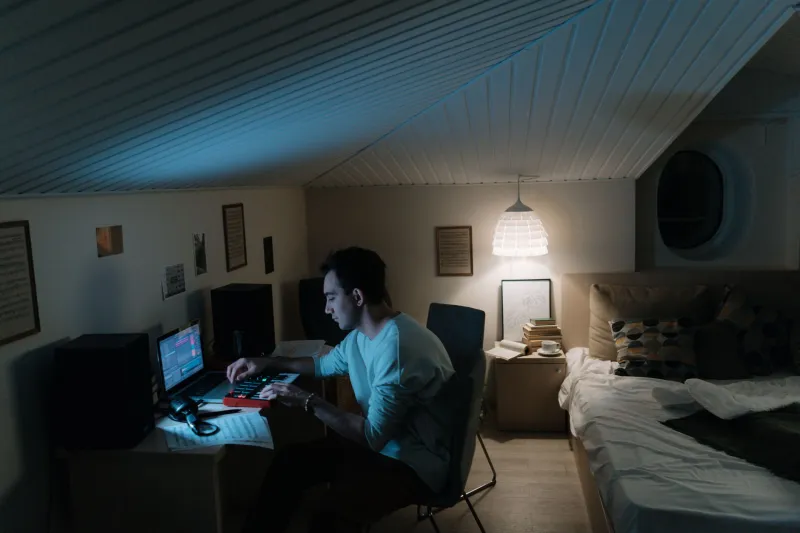
There's a producer somewhere in Lagos right now, headphones on, working a beat on a secondhand laptop at 2 a.m. By the time that beat hits TikTok, it might rack up 40 million plays before any A&R rep even gets the notification. That's not a fantasy — that's Tuesday in 2024.
The music industry spent decades building walls: expensive studios, exclusive contracts, gatekeepers with business cards and corner offices. And then a generation of bedroom producers from Nigeria, Indonesia, Brazil, and dozens of other countries figured out how to walk right around those walls. No label. No studio time. No handshake deal in some Los Angeles high-rise. Just a beat, a platform, and an algorithm that doesn't care where you're from.
The Setup Is Smaller Than You Think
Here's the part that still surprises people: we're not talking about professional studio rigs worth six figures. The average bedroom producer making waves globally right now is working with a laptop, a basic audio interface, a pair of decent headphones, and software like FL Studio or Ableton — tools that cost a few hundred dollars total, if that. Some are working with even less.
Producers in cities like Jakarta and Accra are pulling together setups that would've been laughed out of a 1990s recording session, and they're creating tracks that are landing on major playlists, getting licensed for TV shows, and scoring sync deals that would've previously required industry connections most people spend entire careers trying to build.
The democratization isn't just about access to tools, though. It's about access to ears. TikTok's algorithm doesn't ask for your resume. It doesn't care if you've got distribution through a major or if you're uploading directly from your SoundCloud account. If the sound hits, it spreads — and it spreads fast.
TikTok's Algorithm Is the New A&R
Let's be honest about what TikTok actually is for music discovery right now: it's the most powerful A&R department on the planet, and it works for free. A 15-second clip of a beat with the right hook, the right visual, the right moment of cultural timing — that's all it takes to flip an unknown producer into someone with a million followers and a licensing inquiry in their DMs.
Brazilian phonk producers, for example, have turned this into a science. The subgenre — a dark, slowed-down cousin of Memphis rap that blew up in Russian car culture before bouncing back through South American producers — became a full-blown TikTok phenomenon almost entirely through bedroom production. Tracks built in home setups started soundtracking gym videos, drift car clips, and motivational montages across the US, racking up streams that rivaled established artists.
The same story is playing out in Afrobeats-adjacent spaces, where Nigerian producers are building international audiences by dropping snippets that catch fire on TikTok before the full track even exists. By the time they release on streaming platforms, there's already demand. The label infrastructure that used to create demand is now just trying to catch up to it.
The Producers You Haven't Heard Of Yet (But Will)
Without naming names that'll be outdated in six months, here's the pattern you're seeing over and over: a producer from a mid-sized city outside the traditional music hubs — think Surabaya, Kumasi, Recife — starts posting beats online. The content is raw, sometimes shot on a phone, often showing the actual bedroom setup in the background. That authenticity is part of the appeal.
The TikTok comment sections become their A&R meetings. Fans request specific sounds. Artists from across the world slide into DMs asking for beats. Collaborations happen over file-sharing links. A track gets made between a producer in West Africa and a vocalist in South Korea without either of them ever being in the same room, let alone the same country. It drops, it goes viral, and suddenly both of them are getting booked for festival sets they're scrambling to prepare for.
This is not a niche scenario anymore. It's the dominant path for a growing segment of working producers in 2024.
What 'Professional' Even Means Now
The old definition of professional music production was tied to location and access. You had to be in the room — the right room, with the right equipment, surrounded by the right people. That definition is getting shredded in real time.
Professional now means consistent. It means knowing your software deeply enough to get the sound out of your head and into a file that translates across earbuds, car speakers, and club systems. It means understanding how a beat needs to feel in the first three seconds to stop someone from scrolling. None of that requires a Neve console or a vocal booth.
Major labels aren't ignoring this — they're scrambling to adapt to it. Some are signing bedroom producers after the fact, once the algorithm has already done the work of proving demand. Others are trying to build TikTok-native scouting operations. But the honest reality is that by the time a label moves, a bedroom producer has often already built enough of an independent infrastructure that the deal isn't as necessary as it once was.
The Global Part Is the Whole Point
What makes this moment genuinely different from previous waves of independent music is the scale of the international reach. A bedroom producer in Indonesia isn't just building a local following — they're reaching listeners in Atlanta, London, and São Paulo simultaneously, because TikTok doesn't have borders in the way radio did.
For American music fans, this means the playlist is getting a lot more interesting. Sounds that would've taken years to filter through traditional distribution channels are arriving in real time, already shaped by the reactions of global audiences. The US listener isn't just a passive recipient of what labels decided to push — they're part of a global conversation that's happening right now, across languages and time zones, one beat drop at a time.
The bedroom producer revolution isn't coming. It's already here, and it's already won a few rounds. The question now is what the music industry looks like when the walls are fully down — and whether the people who built those walls are ready for the answer.