You Didn't Choose It — The Algorithm Did: How Foreign Content Is Quietly Rewriting American Taste
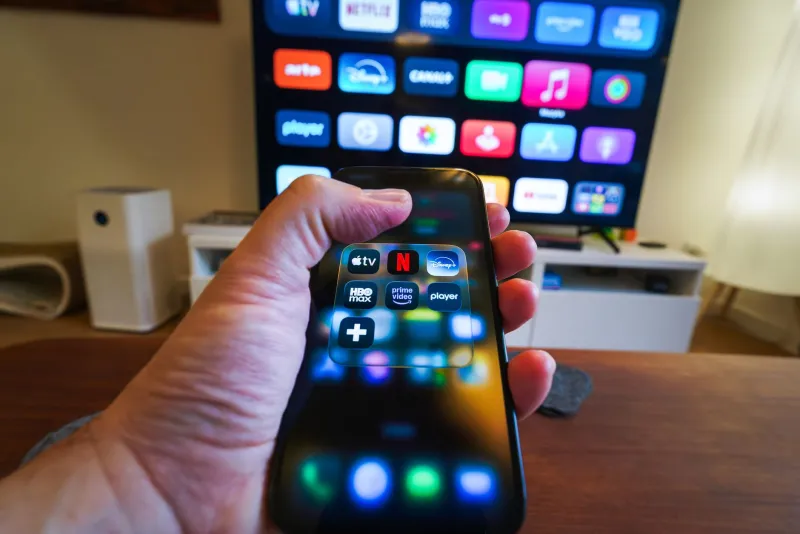
Think about the last show you binged that you didn't actively seek out. Chances are it appeared somewhere in your "Recommended" row, sat there for a few days, maybe showed up again in a "Top 10 in the U.S." banner, and eventually you caved. Now ask yourself: was it in English? Because statistically, there's a growing chance it wasn't.
American audiences are consuming more non-English content than at any point in the country's media history — and most of them have no idea it's even happening in a coordinated way. There's no ad campaign driving it. No cultural ambassador pushing it. Just a quietly humming recommendation engine making decisions that, cumulatively, are reshaping what American taste looks and sounds like.
The Numbers Don't Lie (Even When the Marketing Does)
Netflix's own data has repeatedly revealed something that would have seemed absurd a decade ago: non-English titles consistently rank among the most-watched content in the United States. Squid Game is the obvious headline case — it became the platform's most-watched series ever globally, with U.S. viewership accounting for a massive share of that. But it wasn't a one-off.
Series like Money Heist (La Casa de Papel), Lupin, and Dark all cracked the U.S. top ten with minimal English-language marketing budgets behind them. The German psychological thriller Dark built a devoted American following almost entirely through algorithmic word-of-mouth — the platform's internal recommendation logic kept surfacing it to users who'd watched shows like Stranger Things, and the audience followed the breadcrumbs.
On the music side, Spotify's Discover Weekly and algorithmic playlists have been quietly inserting Afrobeats, reggaeton, and K-pop into American listening habits for years. Artists like Burna Boy and Rema were charting in U.S. markets before most American radio programmers even knew how to pronounce their names. The infrastructure got there first.
How the Machine Actually Works
To understand why this is happening, you have to understand what recommendation algorithms are actually optimizing for. They're not optimizing for language. They're not optimizing for country of origin. They're optimizing for engagement — watch time, completion rate, re-watches, shares, saves.
When a piece of content performs well on those metrics anywhere in the world, the algorithm takes note. It starts testing that content with similar audience profiles in other markets. If engagement holds, it pushes harder. Geography becomes almost irrelevant to the logic.
This is what happened with All of Us Are Dead, the Korean zombie series that hit Netflix in early 2022. It didn't have a splashy U.S. launch. There was no Times Square billboard. But it landed in the global top ten within days because Korean and Southeast Asian audiences drove enormous completion rates, which signaled to the algorithm that this was sticky content. American users started seeing it recommended, clicked out of curiosity, and stayed because the show was genuinely good. The algorithm had essentially A/B tested it on one continent before rolling it out to another.
The Inversion Nobody Announced
For most of the twentieth century, American media was the export. Hollywood set the global template. U.S. pop dominated international charts. The flow of cultural influence was largely one-directional — outward from America, absorbed by everyone else.
What's happening now is a quiet but genuine inversion of that dynamic. Global content is flowing into American homes not because of any deliberate policy or cultural shift, but because the platforms that distribute media are structurally indifferent to national origin. They want engagement. They want subscribers. If a Thai drama or a French crime series delivers that, it gets promoted.
The result is that American taste is being shaped by creative ecosystems that have their own storytelling traditions, their own aesthetic sensibilities, their own ideas about pacing, genre, and character. Korean drama's slower emotional burn is influencing what American viewers will tolerate in terms of episode length and narrative patience. Afrobeats' rhythmic complexity is showing up in the production choices of American R&B artists who've absorbed it through years of algorithmic exposure.
The Passive Revolution
What makes this cultural shift particularly fascinating — and a little eerie — is how passive it is on the consumer end. Nobody is making a conscious statement by watching a Taiwanese crime drama. They're just hitting play on what the app suggested. But the aggregate effect of millions of those individual plays is a genuine reorientation of American cultural appetite.
There's a sociological term for this kind of change: preference falsification in reverse. Usually that concept describes people hiding genuine preferences to conform to perceived norms. What's happening here is almost the opposite — people are developing genuine preferences they didn't know they had, nudged there by a system that spotted the potential before they did.
Marketers and cultural critics are starting to catch on. Studios are greenlighting more international co-productions. American showrunners are citing Korean and Scandinavian series as direct influences. Music producers in Atlanta and Los Angeles are flying to Lagos and Seoul for sessions. The algorithm started it, but the cultural exchange is becoming real.
What Gets Lost in the Feed
It's worth pausing on what this system doesn't do well. Algorithmic promotion tends to reward content that already has momentum — which means smaller, less commercially polished international work can still get buried. The non-English content that breaks through in America tends to be well-funded, visually slick, and genre-adjacent to things Americans already watch. Genuinely niche or experimental international work often doesn't make the cut.
There's also a flattening risk. When algorithms optimize globally, there's pressure — subtle but real — for international productions to adopt storytelling conventions that travel well. That can mean sanding off the culturally specific edges that make a show or song distinctive in the first place. The version of Korean drama that American audiences fall in love with may not be the version that Korean audiences would recognize as most authentic.
The Takeaway for American Audiences
If you've noticed your watchlist looking more international lately, you're not imagining it — and you didn't necessarily choose it in any conscious way. The infrastructure of entertainment has changed around you. The gatekeepers used to be American studios, American radio programmers, American taste-makers. Now the gatekeeper is a recommendation engine that speaks every language and has no particular loyalty to any of them.
That's not a bad thing. Most people who've been pushed toward Squid Game or Burna Boy by an algorithm are glad they went. The exposure is real, the enjoyment is real, and the cultural cross-pollination that follows is genuinely enriching.
But it's worth knowing it's happening. Because when your tastes change — and they are changing — understanding the mechanism behind that shift is the first step to engaging with global culture on your own terms, rather than just wherever the feed decides to take you next.